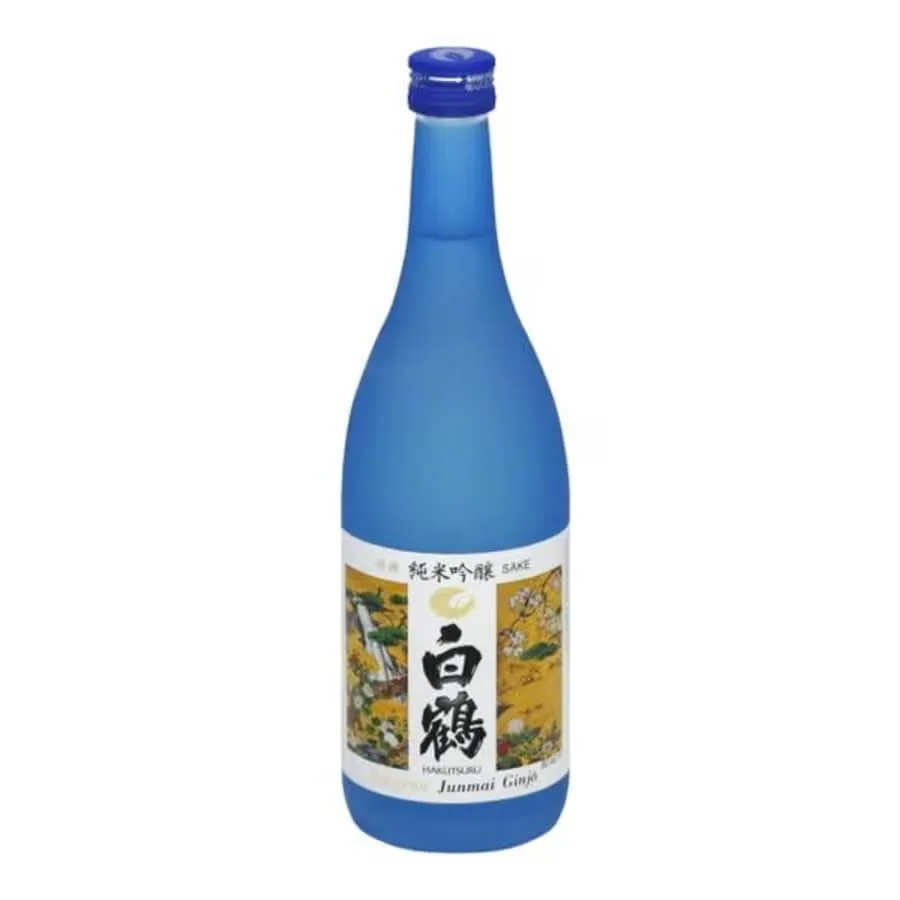

John: I’m going to do something that’s a little food and wine related: Sake. Most people don’t know how to buy sake.
Adam: In fact, I’m very happy you’re doing this because when we went out in Austin with the former Hollywood executive, we went to a very upscale sushi restaurant. I think it’s a neighborhood sushi restaurant, that’s what it’s called. And I ordered sake. And there was a list that was so long. I’m like, just give me the Winter Warrior. I had no idea what I was doing.
John: Yeah. That would be normal. Not for you, for everybody. Okay. So what you’re looking for when you buy a sake, there’s a couple of things. The tip is actually the obscure ending to this little lecture. You want to always get a ginjo sake. And if there’s variations like daijin, a ginjo, or there’s other ginjos, it has to be, any of those variations are fine. They get better. There’s some better ginjos that are really elaborate, but they’re incredibly expensive. But ginjo is your baseline. You want to get a ginjo. That means that’s a sake that ensures it’s 100% rice. They don’t put neutral spirits in like they do the cheaper grades of sake. A lot of them have that in there. If it doesn’t say ginjo, you’re going to get neutral spirits watering it down. Now, the funny thing is, and I’ve only noticed this over the years, and this is an observation that has not been documented, but it’s an observation I made, and I made it initially about 30 years ago when I was at some event, and a Japanese guy was there, and he gifted me a bottle of sake. And it was terrific, one of the best bottles I’ve ever had. I don’t remember exactly what it was, but I do remember one characteristic, and I’ve noticed this over and over and over and over again. When I buy sake from Costco or I buy, as long as it’s ginjo, I buy sake from Costco and I buy sake from our local Tokyo fish market: if it’s in a blue bottle, it’s always good. I know this has not been documented by anybody. It’s completely undocumented. But I have observed this over and over and over again over the years, and you’ll see there’s a whole bunch of sakes up on the wall, and one of them is in a blue bottle. Just buy that and see what happens. It’s going to be good. I have no idea if a Japanese sake expert can come and back me up on this, but I’ve always noticed that the blue bottle sakes are always the best.
Adam: Well, I would love for Sir Mark and Dave Astrid to chime in on this, but I do not doubt you, and I’m always going to say, excuse me, can I see the bottle for this? Can I see all the bottles?
John: Well, now when you’re at a restaurant, the sakes are generally in the big giant bottles. And the big giant bottles, which are, I don’t know, a liter and a half, or no, they’re like two liters, are huge. And that’s where they usually, most of the sake, you get a lot of sake in these big huge bottles. Blue bottles are delicate. So you won’t find a big giant blue bottle because the nature of it, I think it’s boron. Blue bottles are delicate. And that’s why you don’t see too many blue bottles because they’re hard to make. When I was inspecting the glass factory at Pittsburgh Plate Glass, it used to be in Oakland. I got this lecture about, oh, we can’t do blue. Oh, it’s a pain in the ass. They’re brittle. They’re crappy. We don’t like making blue because it’s a boron or something that goes in there and makes them brittle. And so I’ve never seen a giant bottle of even the same brand of sake in a blue bottle. They’re always the brown bottle. So you can’t necessarily look at the bottle in a restaurant because they’re always going to be these giant bottles that they use typically. So you’re going to have to just go with Ginjo.
Adam: Ginjo it is.